

The challenge: Long and unreliable inoculations
At the Great Lakes Bioenergy Research Center (GLBRC), researchers in the Experimental Fermentation Lab (EFL) working with ethanolgenic bacterial cultures involved two suboptimal steps in their inoculation-to-fermentation workflow:
- The traditional inoculation procedure was time-consuming: It required a total of five days before the culture was ready to be transferred into the respirometer for fermentation.
- When preparing inocula, inherent variability in the culture's physiological state sometimes led to fluctuations in growth kinetics, occasionally resulting in fermentation times that extended beyond the desired 72-hour period.
To improve efficiency and standardization, the team sought to implement a new workflow that reduces preparation time and ensures the inoculum enters the fermenter in a consistent and active physiological state.
Using BactoBox® to bring kinetic insight and control
To implement these improvements, EFL introduced BactoBox® as a quantitative tool for monitoring bacterial growth and standardizing inoculations.
The team began by measuring growth kinetics in shake flasks, using BactoBox® to track bacterial cell concentrations over time. This allowed them to map how quickly cultures progressed through growth phases under their own conditions.
They then used BactoBox® to check and standardize cell concentrations at three critical stages:
- After thawing the cryovial
- Following the wake-up step
- Before transfer from the shake flask
Armed with this insight, the researchers redesigned their inoculation workflow. By aligning bacterial growth dynamics with precise cell counts, they were able to generate a ready-to-use inoculum within just one day.
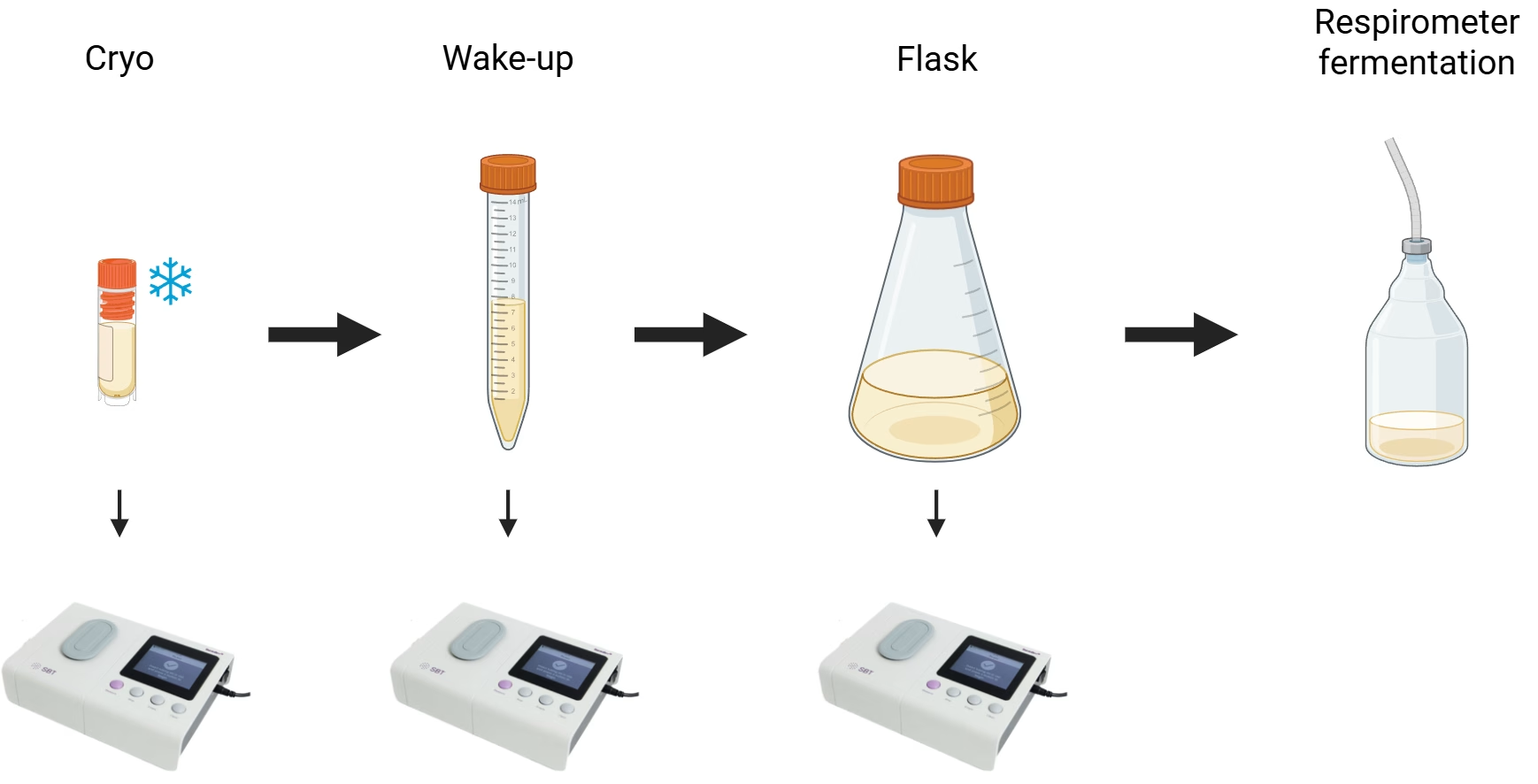
Figure 1: Overview of the improved inoculation workflow optimized at GLBRC. Using BactoBox® at three key stages—after thawing the cryovial, following the wake-up step, and before transfer from the shake flask—allowed researchers to monitor and standardize cell concentration throughout the process.
The results: Fast, consistent fermentations
The impact of the new workflow was immediate.
Across three independent experiments, fermentations now completed reliably within 36 hours — nearly twice as fast as before, and without the variability previously observed. The inoculum entering the fermenter was more synchronized and physiologically consistent, leading to predictable fermentation kinetics.
The overall lead time from inoculation to fermentation was reduced to one day. The new workflow saves time, reduces risk, and frees up laboratory resources for other important tasks.
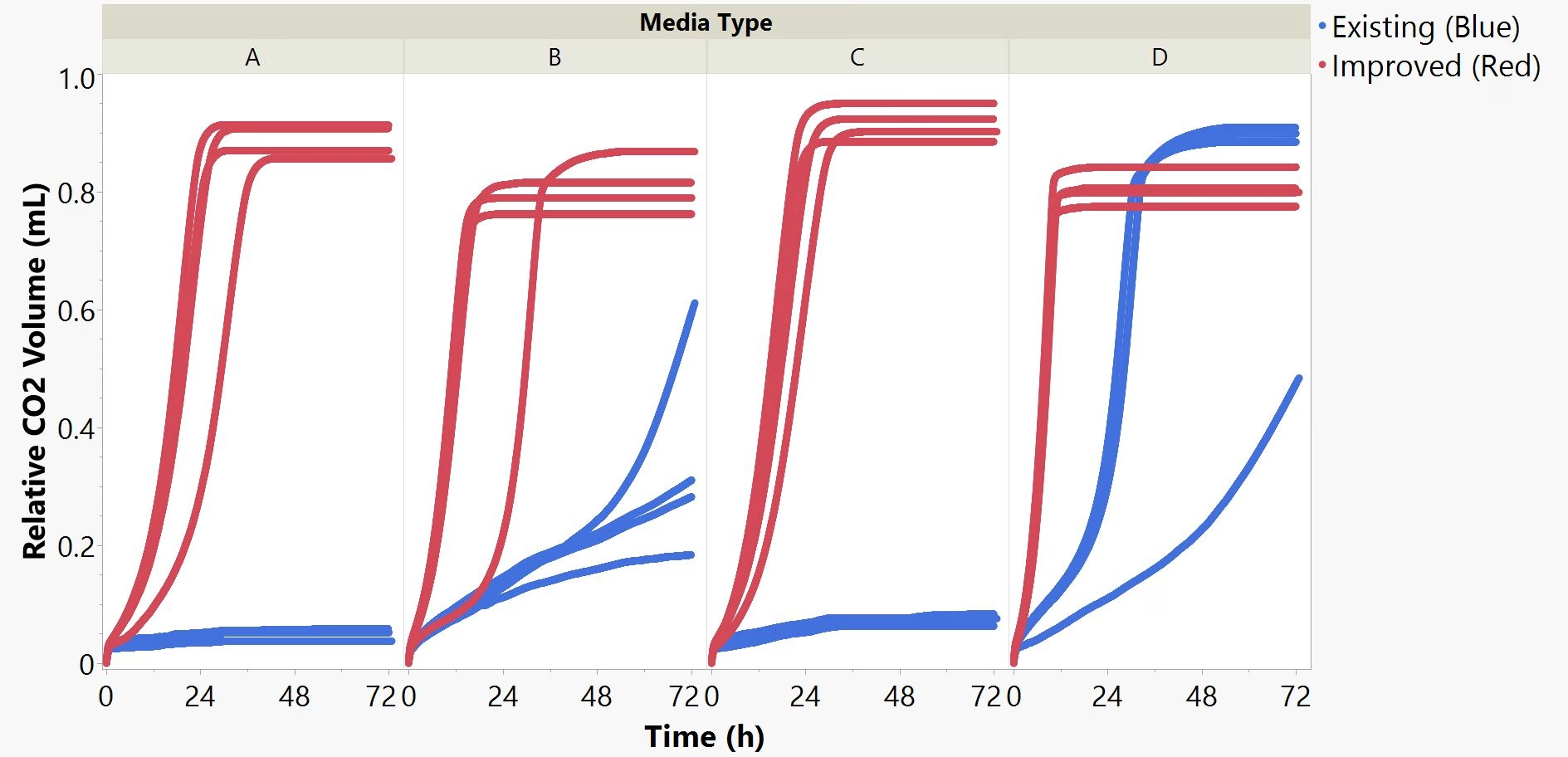
Figure 2: Fermentation completion profiles demonstrate the robustness of the improved inoculation workflow. The existing workflow (blue) frequently failed to reach completion within 72 hours, whereas the improved workflow (red) consistently completed fermentation within approximately 36 hours.
Looking ahead
With this redesign, the EFL has a reproducible and efficient inoculation pipeline tailored to their bacterial system. BactoBox® has given the researchers a new level of control — not just over bacterial counts, but over the timing and direction of growth.
The GLBRC's success illustrates what BactoBox® was designed to achieve: transforming microbial workflows from slow and uncertain into fast, reliable, and data-driven processes.
5→1
Days reduced for inoculation prep
36h
Reliable fermentation completion
5×
Faster than previous workflow